Knowledge
· The Bloomfield Team
Why Training Manuals Fail and What Actually Works for Knowledge Transfer
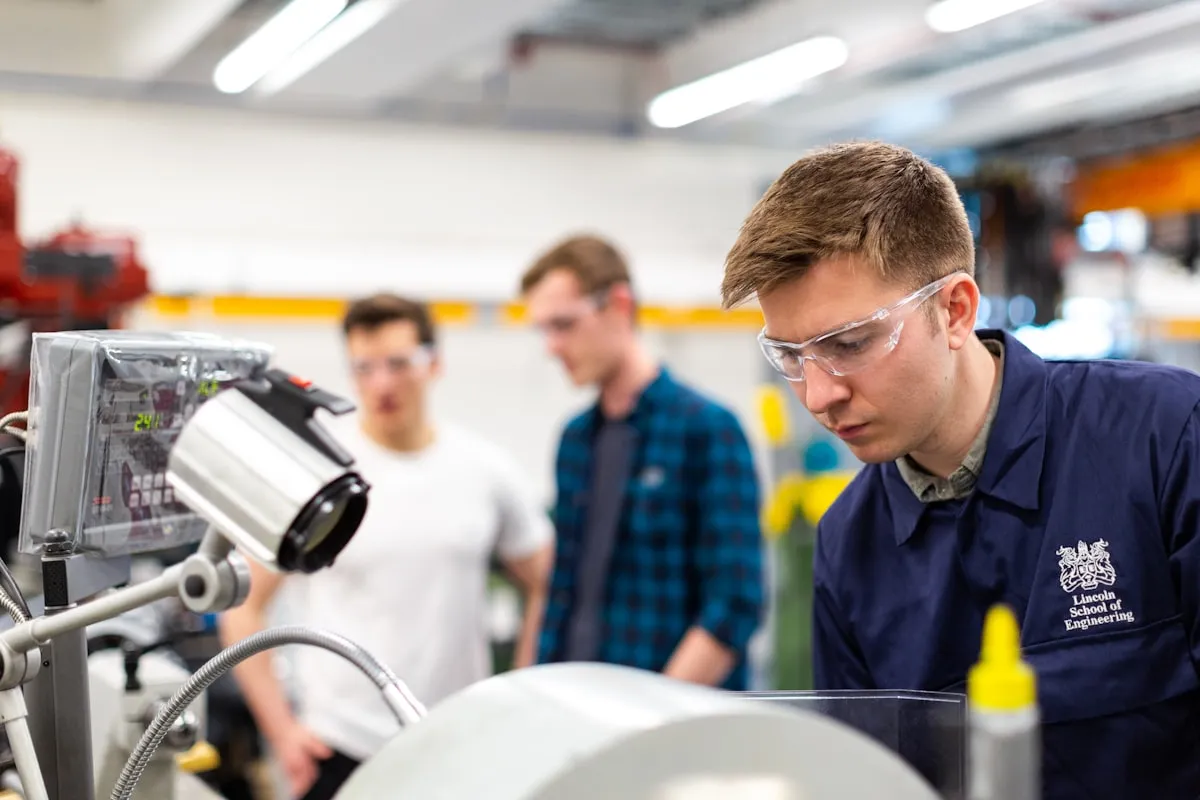
A quality manager at a 90-person stamping operation spent four months building a training manual for the press department. 187 pages. Setup procedures for every press, die maintenance schedules, material handling protocols, troubleshooting guides for the 12 most common defects. Printed, bound, distributed to every press operator and setup tech on the floor.
Six months later, three copies sat in the break room with coffee rings. Two were in desk drawers. The rest had disappeared. When a new press operator started that fall, the supervisor handed them to a senior operator and said, "Watch what he does."
The manual was accurate. Thorough. It failed to transfer knowledge to a single person who needed it.
Why the Format Is the Problem
Training manuals deliver static, linear information to people working in dynamic, nonlinear environments. A press operator encountering chatter on a progressive die cannot locate the manual, find the troubleshooting section, read the diagnostic tree, and identify the fix in the time they have. They need the answer now, specific to the die they are running, the material they are stamping, and the symptoms they are seeing.
Manuals are organized by topic. Work is organized by situation. Manuals assume the reader knows what section to look in. Workers often do not know the name of the problem, only the symptoms. Manuals are written once and updated rarely. Manufacturing operations change constantly.
For a deeper look at how these ideas connect across the shop floor, see our guide to manufacturing knowledge management.
Research on knowledge transfer in manufacturing consistently finds that 80 to 90% of operational knowledge transfers through direct interaction between experienced and less experienced workers. The manual sits on a shelf. The learning happens on the floor.
The Three Types of Manufacturing Knowledge
Procedural knowledge covers the steps to complete a task. Setting up a machine. Entering a job in the ERP. Performing an incoming material inspection. This is explicit and documentable. Manuals handle it adequately, though they are often outdated by the time they are published.
Diagnostic knowledge covers identifying and solving problems. When surface finish on a turned part degrades, what are the possible causes and how do you determine which applies? Tool wear, material inconsistency, chucking pressure, coolant flow? This is harder to document because the decision path depends on context: which machine, which material, which tool, what the part looked like before the problem started.
Judgment knowledge is the most valuable and most difficult to capture. The accumulated sense for how things should look, sound, and feel when running correctly. A machinist with 20 years can hear a cut change pitch and know the tool is about to fail before any measurement confirms it. An estimator looks at a drawing and knows within 30 seconds the tolerance stack will cause production problems. This lives in the body and intuition of experienced workers. No manual has ever captured it.
Manuals address the first type adequately, the second poorly, the third not at all. The second and third types account for the vast majority of knowledge that walks out the door when someone retires.
Five Specific Failure Modes
The currency problem. A manual is accurate the day it is printed. By month three, procedures have changed, new machines are installed, customer requirements have evolved. Nobody updates the manual because revising a 200-page document is its own project. Within a year, the manual is a historical artifact.
The search problem. Finding information takes five to ten minutes of flipping through a table of contents, finding the chapter, scanning pages. On a shop floor where decisions happen in seconds, that delay is disqualifying. Workers default to asking the person next to them.
The context problem. "Adjust chucking pressure to 120 PSI for thin-wall parts" is missing the context that makes it useful. How thin is thin-wall? All materials or only aluminum? Long and slender versus short and wide? The person who wrote the manual knew these qualifiers. The reader does not, and the manual does not supply them.
The engagement problem. Manufacturing workers learn by doing. They learn fastest solving real problems with guidance from someone who has solved it before. A manual is passive. It cannot answer follow-up questions, demonstrate the feel of a proper tool change, or say "no, watch my hands, like this." The medium is mismatched to how adults in hands-on professions acquire skill.
The completeness problem. Experts are notoriously bad at articulating their own expertise because much of it has become automatic. A senior machinist does not think "I am adjusting the feed rate because chip formation tells me the material is harder than expected." They adjust. That automatic response, the product of thousands of hours, never makes it into the manual because the expert has forgotten it is a learned behavior.
What Actually Works
Knowledge transfer works when it meets three conditions: knowledge is specific to the situation the worker faces, available at the moment they need it, and drawn from the shop's actual production history rather than generic best practices.
Contextual knowledge delivery. Organize knowledge by situation, not topic. When a worker sets up a job, the system surfaces setup notes, tooling selections, and lessons learned from the last time this or a similar part ran. When a quality issue arises, the system shows history of similar defects on similar parts: causes, resolutions, preventive measures. Knowledge arrives when needed, in the format needed, with the specificity of a colleague saying "last time this happened, here is what we did."
Living knowledge systems. A system drawing from job records, quality reports, setup sheets, and operator notes stays current automatically. Every job generates new data feeding back in. When a new fixturing approach solves a vibration problem, that solution becomes available to everyone encountering a similar problem. The knowledge base grows with the operation rather than decaying in a binder.
Searchable by symptom. A worker who types "chatter on thin-wall aluminum housing" and gets three relevant case histories from the shop's own experience will use that system daily. A manual organized by machine type and operation category gathers dust. The system needs to think the way the worker thinks: problems present as symptoms, not category headings.
A custom knowledge system built around your shop's data captures diagnostic and judgment knowledge embedded in production records, organizes it by relevance to the current task, and delivers it at the point of need. The knowledge your team has built over decades becomes a permanent, searchable, continuously updated asset.
Making the Transition
This does not require throwing out existing manuals. Procedural knowledge in those manuals is still valid as a foundation. What it requires is adding two layers manuals cannot provide: the contextual layer drawn from production history, and the retrieval layer that delivers the right knowledge at the right moment.
The shop that does this stops losing knowledge when people retire, stops relearning the same lessons, and stops relying on whoever happens to be standing next to the new worker at the moment they need help. The knowledge belongs to the organization. That is how it should have worked from the beginning.
Related Field Notes
Build a knowledge system that actually works
We will review how knowledge moves through your operation and show you where a custom system can fill the gaps that manuals leave behind.
Talk to Our Team →