· The Bloomfield Team
10 Signs Your Manufacturing Operation Is Running on Tribal Knowledge
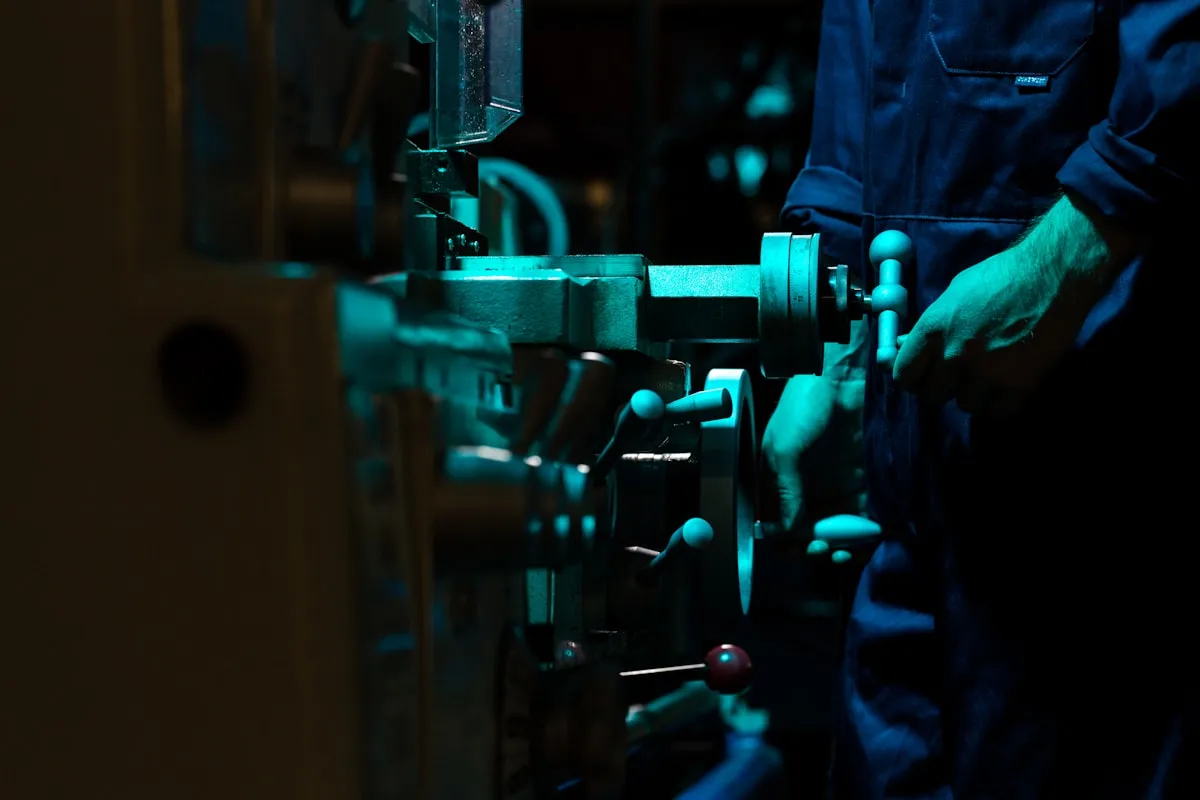
Tribal knowledge is the operating system underneath every documented process in your shop. The setups your best machinist adjusts by feel. The quoting shortcuts your senior estimator keeps in a personal spreadsheet. The scheduling workarounds your production manager built over 15 years of handling the same customers. None of it lives in any system your company owns.
The National Association of Manufacturers estimates that 22% of the current manufacturing workforce will retire by 2030. That means a quarter of the people holding your undocumented processes together could leave within five years. Here are 10 signs that your operation carries more tribal knowledge risk than you realize.
1. One Person Owns an Entire Process
If your quoting process stalls when your lead estimator takes vacation, that process lives in a person instead of a system. Every shop has at least one role where the backup plan is "wait until they get back." That is tribal knowledge in its most visible form.
2. Training Takes Months Longer Than It Should
A new machinist joins the team. Formal training covers the machines, the ERP basics, the safety protocols. Then six months of informal learning begins: which fixtures actually hold tolerance, which material suppliers deliver on time, which customers accept visual imperfections on non-critical surfaces. When your onboarding timeline depends more on hallway conversations than documented procedures, the knowledge base is tribal. For a deeper look at this challenge, see our complete guide to manufacturing knowledge management.
3. Retired Employees Still Get Phone Calls
This one requires no explanation. If your team calls someone who no longer works for you to ask how a job ran three years ago, the knowledge never transferred. It left with them.
4. Setup Sheets Are Incomplete or Ignored
Setup documentation exists in most shops. Whether anyone trusts it is another question. When machinists prefer to check with the guy who ran the job last time instead of reading the setup sheet, the documentation has become decoration. The real instructions live in someone's memory.
5. Quoting Accuracy Varies by Estimator
Two estimators quote the same part. One comes in at $4,200. The other at $5,800. The gap is rarely about math. The experienced estimator remembers that the tight tolerance on the bore requires a secondary grinding step and adjusts cycle time accordingly. The newer estimator follows the standard formula. Inconsistent quoting is a tribal knowledge symptom, and it shows up directly in either lost bids or lost margin.
6. Critical Information Lives in Personal Spreadsheets
Your production planner has a spreadsheet tracking vendor lead times that the ERP never captured. Your quality manager keeps a personal log of customer-specific inspection requirements that differ from the drawing specs. Your shop foreman maintains a notebook with machine-specific quirks. Each of these documents represents institutional knowledge stored in a private format on a personal device. If the person leaves, the file goes with them or sits forgotten on a shared drive nobody knows to check.
7. The Same Mistakes Recur After Turnover
A job that caused scrap problems two years ago comes back. The machinist who solved it has moved on. Nobody documented the fix, so the new operator runs into the identical issue, burns the same four hours troubleshooting, scraps the same three parts. This cycle repeats across every function. Quality problems that were solved once get solved again from scratch because the solution existed only in someone's head.
8. Shift Handoffs Create Information Gaps
Second shift inherits a job mid-run. The first-shift operator adjusted feed rates to compensate for tool wear but did not log it. Second shift runs the original parameters. Parts drift out of tolerance. Shift handoff problems are tribal knowledge problems with a 12-hour time delay built in.
9. Your ERP Contains Data Nobody Trusts
The system says the job took 14 hours. The shop floor says it took 9. Estimated material cost was $3,200 but actual was $4,100 because nobody updated the pricing after the last supplier change. When the data in your ERP diverges enough from reality, operators stop using it and start relying on personal knowledge, the spreadsheets from sign number six, or direct communication. The ERP data that could anchor your operation becomes background noise.
10. You Cannot Explain Your Own Processes in Writing
Ask five people on the floor how a specific job gets routed, quoted, scheduled, and inspected. You will get five different answers with overlapping but inconsistent details. The process works because the people running it adapt in real time. Writing it down would require reconciling contradictions nobody has surfaced because the informal system functions well enough with the current team.
That last phrase is the risk. "With the current team." The moment the team changes, the process breaks.
What to Do About It
Tribal knowledge is not inherently bad. It represents decades of hard-won operational experience. The problem is storage. When critical knowledge lives exclusively in people, it is subject to the same risks as any other single point of failure: retirement, resignation, illness, promotion, transfer.
The goal is to capture that knowledge in a form that survives personnel changes and compounds over time. That means connecting the data your team already generates, from job records and setup sheets and quality logs and quoting history, into a system that makes it searchable, structured, and available at the point of decision.
If you recognized three or more of these signs in your operation, the risk is real and measurable. The manufacturers who address it now will carry an operational advantage into the next decade. The ones who wait will discover the cost of tribal knowledge the way most shops do: the day someone irreplaceable walks out the door.
Related Field Notes
Find out where tribal knowledge puts your operation at risk
We will map the undocumented knowledge in your shop and show you how to capture it in a system your team actually uses.
Talk to Our Team →