· The Bloomfield Team
The 90-Minute Morning Ritual That Tells You Nothing
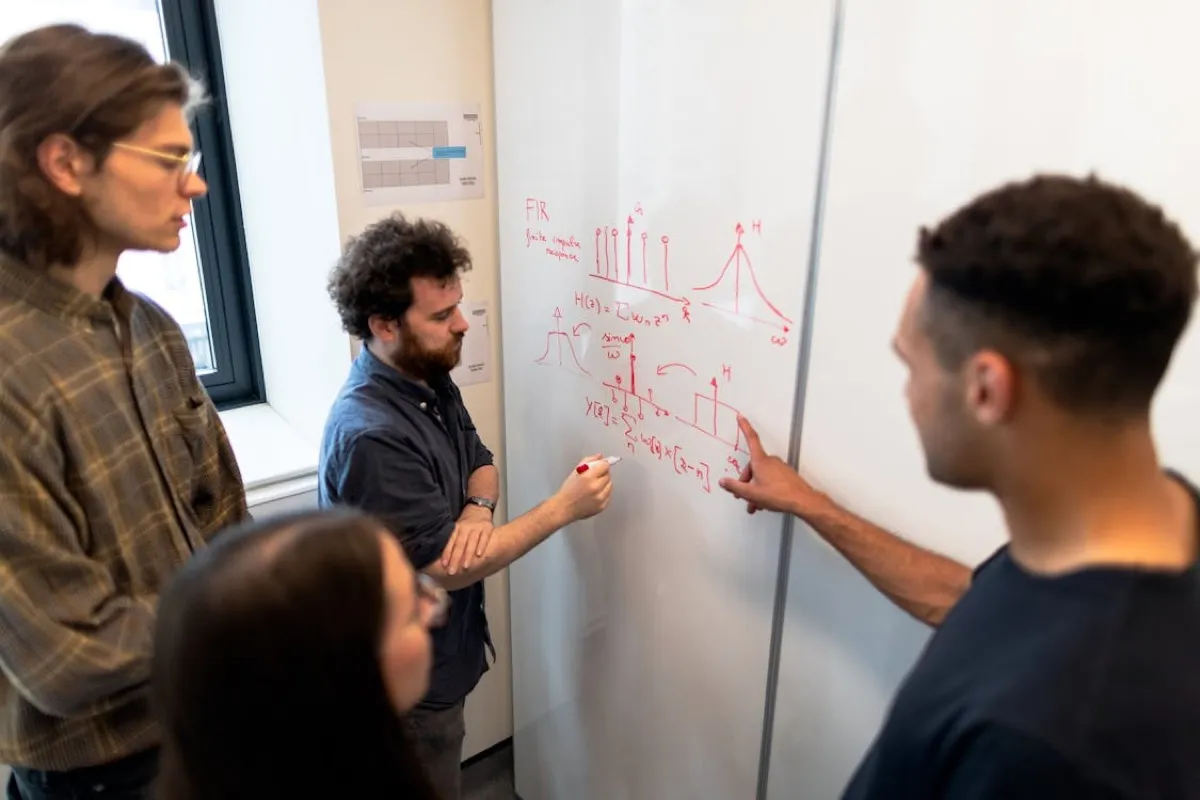
The most experienced person in your operation spends the first 90 minutes of every day doing a job that a connected system could do in seconds. They walk the floor. Check the ERP. Open three spreadsheets. Talk to the first-shift lead. Read the whiteboard. Scan email for customer complaints, material delivery updates, and overnight rush requests.
By 7:30 AM, they hold a mental model of where the operation stands. Which machines are running. Which jobs are behind. Which material is missing. Which customers need a call. That model will guide decisions for the next two or three hours, at which point something changes and part of it needs rebuilding.
312 hours per year. That is what this ritual consumes. And the output is a picture that starts decaying the moment it is assembled.
The Information Collection Circuit
We mapped the morning routine of production managers at seven job shops in the Midwest, ranging from 25 to 120 employees, running CNC machining, fabrication, stamping, and injection molding. Details varied. The pattern was identical.
It starts with the ERP. The production manager opens the dispatch list, sorts by due date, and looks for jobs due this week that are behind schedule or have not started. This takes 10 to 15 minutes because the ERP shows job status without the full context: whether material is on hand, whether the prior operation finished, whether tooling is set up, whether the assigned operator showed up today.
For a deeper look at how these ideas connect across the shop floor, see our guide to production visibility.
Then the floor walk. The manager visits each work center to see what is running, what is waiting, where the problems are. Machine down for maintenance. Setup running long. Operator called in sick, cell running with one person instead of two. None of this lives in any system. It exists only on the floor, observable only in person.
Then spreadsheets. Most shops have at least one shared spreadsheet tracking something the ERP cannot handle. Hot jobs. Customer priorities. Outside processing status. Material on order. The production manager opens these, cross-references them against the ERP data and the floor walk, and mentally stitches together a unified picture.
Then email. Overnight messages from customers. Shipping notifications from material suppliers. Notes from second shift about problems that occurred after the manager left. Each message potentially changes the picture assembled from the first three sources.
Total time: 60 to 90 minutes. Output: a mental model held by one person, built from four disconnected sources, accurate for roughly two hours.
What the Ritual Actually Costs
At 75 minutes per day across 250 working days, the morning information-gathering circuit consumes 312 hours annually. For a production manager at $95,000 fully loaded, that is $14,200 in direct labor cost for the task of finding out what is happening.
The direct cost is the smaller number.
During those 75 minutes, the production manager is not solving problems, not improving processes, not training newer supervisors, not working with engineering on upcoming jobs, not analyzing why three jobs last week took 40% longer than estimated. They are gathering information that, in a well-connected operation, should be waiting for them when they arrive.
Recover 60 of those 75 daily minutes and the production manager gets back 250 hours per year. Six full working weeks. Redirected toward process improvement, scheduling optimization, or root cause analysis on recurring problems, those hours produce measurable gains in throughput, quality, and delivery performance.
A 2024 Manufacturing Institute analysis estimated that production managers at small and mid-size manufacturers spend 35% to 45% of total working hours gathering information rather than acting on it. The morning ritual is the most concentrated example, but information gathering continues all day, every time a question requires checking multiple systems.
Why the Picture Decays
The operation generates new information continuously. The information collection process is a batch event that happens once a day. That structural mismatch is the problem.
At 8:15, a machine goes down. The production manager does not know until someone walks over or until the next floor walk. At 9:00, a material delivery arrives a day early. The schedule built around material availability is now wrong in the shop's favor, but nobody recalculates because the delivery information has not propagated from receiving to planning. At 10:30, a customer calls to expedite an order due next week. The production manager shuffles priorities in their head and on the whiteboard. The ERP still shows the old schedule.
The decisions at 10:30 AM are based on a picture assembled at 7:30, modified by whatever information happened to reach the manager between those two points. In a high-mix job shop running 80 to 150 active jobs across 10 to 15 work centers, that morning picture is substantially wrong by noon.
Experience, judgment, and frequent floor walks compensate. This approach has worked for decades. The question is whether it needs to keep working this way when the alternative already exists.
What a Connected Morning Looks Like
6:00 AM. One screen. The production dashboard shows every active job, sorted by ship date proximity and risk level. Risk is calculated from remaining operations versus available time, material availability, machine status, and historical data on similar jobs that ran late.
Red-flagged jobs need attention today, and the dashboard shows exactly why. Material for Job 4472 has not arrived; supplier tracking shows it in transit, delivery estimate tomorrow. Machine 7, scheduled for Job 4488, has been down since second shift with a spindle alarm. Cell 3 is short-staffed from a call-out.
For each flagged item, the next action is clear because the context is already assembled. No checking the ERP for job status, then a spreadsheet for material, then a floor walk for machine status. Everything in one place, updated continuously.
This review takes 15 minutes. The remaining 60 minutes go to problem-solving, scheduling adjustments, and proactive communication with customers about at-risk jobs before delays materialize.
As the day progresses, the dashboard updates in real time. Machine 7 comes back online at 9:00 AM; the flagged job recalculates its risk and moves to yellow. Material for Job 4472 arrives at receiving; status updates automatically. A customer calls to expedite; the manager sees immediately which jobs would be affected and which delivery dates would slip.
The mental model that lived in one person's head now lives in a system that is always current, accessible to anyone who needs it, and does not degrade between floor walks.
Building the Connected View
Every piece of data required already exists. Job status and due dates are in the ERP. Material receipt data is in the ERP or the receiving log. Machine status can be captured from controls or simple operator inputs. Operator availability is in the attendance system.
The problem is connecting these sources into a single view that updates continuously and presents information in a format that supports decisions rather than requiring further investigation.
That is what custom AI tools for manufacturers do. They pull data from the ERP, machine monitoring, spreadsheets, and emails, then deliver a connected picture of the operation that is always current. The production manager stops being the information hub and starts being the decision maker. The 90-minute ritual becomes a 15-minute review. The 250 hours spent gathering information become 250 hours spent improving the operation.
The best production managers already know what the floor needs. They spend too much of their time finding out what the floor is doing. Those are two different activities. Only one requires their expertise.
Related Field Notes
See what your morning could look like
We will map your current information-gathering process and show you how a connected production view can give you the picture in minutes instead of hours.
Talk to Our Team →