· The Bloomfield Team
How to Capture Tribal Knowledge Before Your Best Machinist Retires
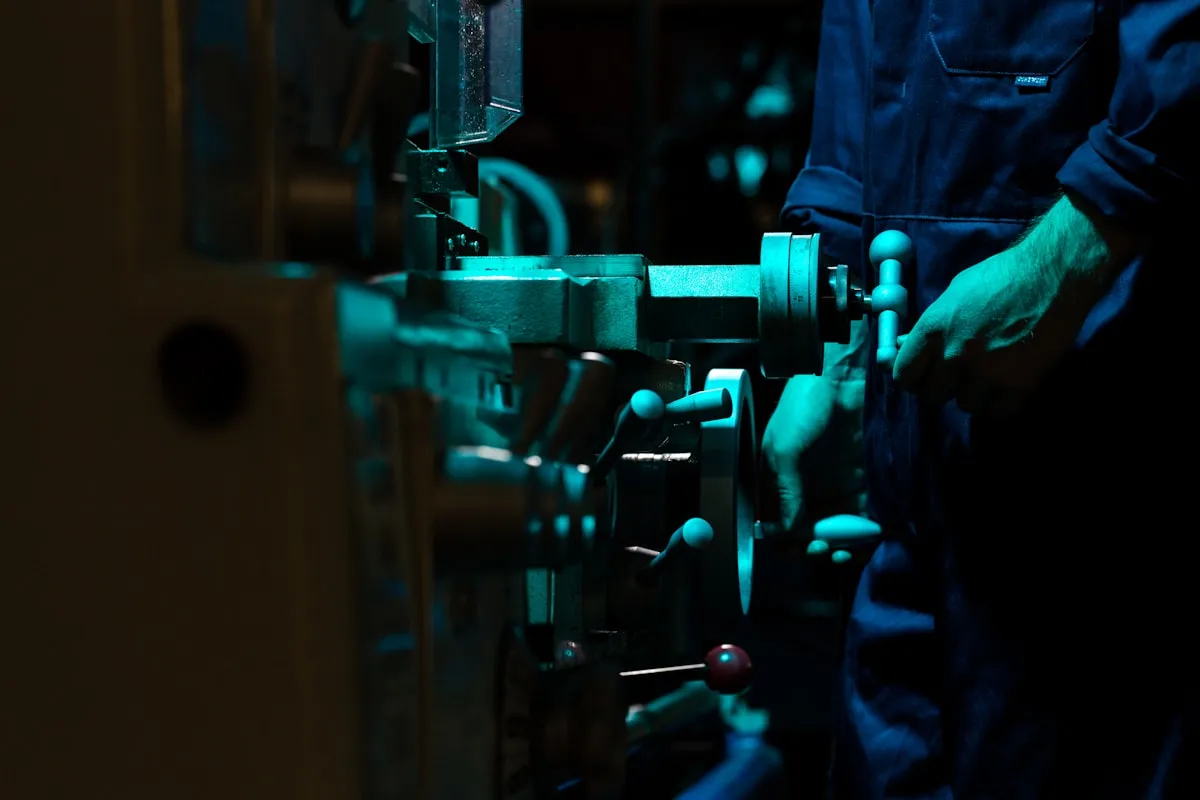
Your best machinist has been running a Mazak for 22 years. He knows the spindle on Machine 7 pulls 0.002" to the left on long cuts. He knows 6061-T6 from your primary supplier machines differently than the same alloy from your backup supplier. He knows a particular customer's engineers always under-specify fillet radii and that adding 0.5mm to the drawing prevents inspection failures.
None of this is written down. He is 58. He plans to retire in three years. When he leaves, every piece of that knowledge leaves with him.
This is the defining problem of American manufacturing in 2026. The average age of a skilled machinist in the United States is 52. Roughly 10,000 machinists and CNC operators retire every year. The pipeline of replacements does not keep pace. Trade school enrollment for manufacturing programs has improved, but the gap between retiring workers and incoming ones remains wide.
The Scale of the Problem
A retiring machinist does not take general knowledge about machining. That can be taught. What they take is specific, contextual, hard-won understanding of how your shop runs with your machines, your materials, your customers, and your quality standards.
Tribal knowledge in manufacturing refers to the accumulated operational intelligence that exists in the heads of experienced workers and has never been formally documented. Process tricks. Machine-specific adjustments. Customer preferences. Material handling quirks. Quality shortcuts. The hundreds of small decisions experienced operators make automatically every shift.
For a deeper look at how these ideas connect across the shop floor, see our guide to manufacturing knowledge management.
Deloitte and the Manufacturing Institute estimated that the manufacturing skills gap could leave 2.1 million jobs unfilled by 2030. The raw labor shortage is part of the problem. The knowledge shortage is the part nobody has a plan for.
What Tribal Knowledge Actually Looks Like
Understanding what leaves when someone retires starts with categorizing what they carry.
Machine-specific knowledge. Every CNC machine has personality. The operator who has run it for a decade knows which axis drifts, what spindle speeds produce the best surface finish on specific materials, how the machine behaves differently in summer humidity versus winter dry air. This comes from thousands of hours of observation and affects quality, cycle times, and scrap rates directly.
Process knowledge. The sequence of operations that works best for a particular part family. The fixturing approach that drops setup time from four hours to 90 minutes. The order in which features should be cut to minimize thermal distortion. None of this lives in the CAM program. It lives in the operator's hands.
Customer knowledge. Which customers accept parts at the loose end of the tolerance band. Which ones measure every dimension to the micron. Which purchasing managers need a phone call before you ship. This knowledge determines whether jobs go smoothly or generate NCRs and returns.
Failure knowledge. What has gone wrong before and why. The material lot that caused chatter. The toolpath that looked right in simulation but deflected the tool in practice. The heat treat vendor that changed their process without telling anyone. This prevents the same mistakes from being repeated by operators who have never seen the failure mode.
Estimation knowledge. How long a job actually takes versus what the router says. Where setup time estimates are consistently wrong. Which secondary operations always take longer than quoted. This is the knowledge that makes accurate quoting possible.
Why Traditional Methods Fall Short
Most shops try one of three approaches. All help. None solve the problem.
Written procedures and work instructions. SOPs document the approved method for running a part or operating a machine. They cannot capture the contextual judgment experienced operators apply when the standard method fails. An SOP says set the feed rate at 0.005 IPR. The experienced machinist knows that on this machine, with this material, at this temperature, 0.004 IPR gives a better finish and extends tool life by 30%. That adjustment never makes it into the document.
Mentoring and shadowing programs. Pairing junior operators with senior ones is the oldest knowledge transfer method in manufacturing. It works when you have time. A senior machinist can mentor one or two people at a time. When five experienced operators retire in the same 18-month window, which happens regularly at shops with aging workforces, mentoring capacity collapses.
Video documentation. Recording setup procedures is better than nothing. But video is a terrible search format. An operator who needs to know how to fixture a specific part geometry needs the answer in 30 seconds, not after scrubbing through 45 minutes of footage.
How AI Knowledge Systems Work
A knowledge engine built for manufacturing does what none of the traditional approaches can. It takes scattered, unstructured, multi-format information and makes it searchable, contextual, and instantly accessible.
The system connects to the data sources your shop already has. ERP job records from JobBOSS, Epicor, or ProShop. Setup sheets. Quality records. Process notes. Emails between engineers and operators. CAM files and the notes attached to them. Customer specifications and internal annotations accumulated over years.
On top of that structured data, the system ingests unstructured knowledge from experienced operators. Recorded interviews where a senior machinist walks through their approach to a difficult part family. Annotated photos of fixtures and setups. Machine-specific adjustment notes. Customer preference logs.
All of this gets organized into a searchable intelligence layer that anyone on the team can query in plain English.
An operator types: "How did we run the 17-4 PH housing for Pratt last year?" The system returns the job record, the setup sheet, operator notes about a feed rate adjustment on the second operation, and a quality note about a dimensional issue resolved by changing the workholding approach. That answer used to require finding the one person who remembered the job and hoping they were on shift. Now it requires a 10-second query.
Building the System Before the Knowledge Leaves
The critical constraint is timing. Once an experienced operator retires, the knowledge capture window closes. You can interview them after they leave, but context fades fast. The richest capture happens while the operator is still doing the work, still encountering edge cases, still making adjustments in real time.
A practical knowledge capture program runs in four phases.
Phase one: inventory the knowledge. Identify who holds critical tribal knowledge and what domains they cover. Most shops have three to five people whose departure would create immediate operational problems. Start with them.
Phase two: structured interviews. Work through the parts, processes, machines, and customers each expert knows best. Ask specific questions. What do you do differently on this machine than what the program says? What do you check first when a part comes out of spec? Which jobs always take longer than the router says, and why? Record everything.
Phase three: connect the existing data. Pull historical job records, quality data, setup sheets, and process notes into a structured system. This data already contains embedded knowledge. The job that took 14 hours instead of the estimated 8 tells a story. The NCR that resulted in a process change tells a story. Organized and searchable, this data starts answering questions on its own.
Phase four: build the knowledge engine. Combine interview data and structured operational data into a single queryable system. As new jobs run and new problems get solved, the system grows. The knowledge base is a living system that accumulates intelligence over time.
What a Knowledge Engine Changes
New operators ramp up faster because they have access to the accumulated experience of the team, organized around the specific work they are doing. A machinist in their second year can access setup notes and process adjustments that previously required a decade of experience.
Quality becomes more predictable. When process knowledge is accessible to everyone, scrap rates drop because operators can check what went wrong on similar jobs before they start cutting. Rework rates drop because fixturing and tooling decisions are informed by history.
The shop builds resilience. When a key employee is out sick, on vacation, or retires, the operation does not lose its ability to run their jobs effectively. The knowledge persists in the system. The shop's capability is no longer dependent on who happens to be on the floor that day.
Every job that runs adds data to the system. Every problem solved and documented makes the knowledge base more valuable. Over two to three years, the system becomes the single most complete record of how your operation works.
The Window Is Open Now
The retirement wave in American manufacturing is a present problem. The machinists and engineers who built the operational knowledge your shop relies on are leaving. Some have already left.
The technology to capture, organize, and make that knowledge permanently accessible exists today. Two years ago, building a system like this required a seven-figure budget and a team of data engineers. The cost has dropped by an order of magnitude. A working knowledge engine connected to your ERP and process data can be built in weeks.
When your best machinist walks out the door for the last time, everything they know either walks out with them or stays. That decision is being made right now, whether you are making it deliberately or not.
Related Field Notes
Start capturing what your team knows
We will assess your operation's knowledge risk and show you how a knowledge engine works with your existing data.
Talk to Our Team →